Holanda Meridional as a Destination

South Holland is often mistaken for the whole country, and it is easy to see why: here are the port city, the political capital, the dunes, the tulip fields, the cheese towns, the canals and the windmills, all within short distances of each other. It is the Netherlands at its most concentrated, but also at its most varied: urban, maritime, historic, and green. The province is the country’s most densely populated, yet its open polders, dune landscapes and river deltas are never far from the cities.

This is a place for travellers who like contrast. You can spend a morning with contemporary architecture in Rotterdam, an afternoon among Delft’s canals, and the next day walking through dunes or boating past Kinderdijk’s windmills. This guide helps you understand the best areas to stay in South Holland, from cultural cities and seaside towns to slower rural corners.

Why travellers love South Holland

  • See Dutch water engineering at Kinderdijk with 19 historic mills.
  • Walk between royal palaces, museums and the sea in The Hague.
  • Discover Rotterdam’s architecture, harbour culture and creative neighbourhoods.
  • Drift through Delft’s canals and blue-and-white ceramic heritage.
  • Cycle the dunes and bulb fields between Leiden, Lisse, Katwijk and Noordwijk.

Where to stay in South Holland

The best place to stay in South Holland depends on one’s preference: city culture, coast, historic towns, design, or quiet landscapes. Because the province is well connected by train, tram, metro, bus and waterbus, many travellers can choose one strong base and explore widely from there.

Rotterdam

Rotterdam is South Holland’s most contemporary city, shaped by the River Maas, maritime trade and a post-war approach to architecture. It suits travellers who enjoy design, food halls, galleries, waterfront walks and an urban energy. The skyline, Erasmus Bridge, Central Station, Markthal and harbour give the city a different mood from the canal-side image of the Netherlands; it feels international, modern and inventive. The city has excellent transport, giving the opportunity for easy day trips to places like Delft, Gouda, Dordrecht and Kinderdijk.

Where to stay?
In and around Rotterdam, the best accommodations are mainly boutique hotels, small design hotels and characterful apartments near the centre, Museumpark, the Maritime District, Delfshaven or Kop van Zuid. The best places to stay in Rotterdam work especially well for travellers who want a central location with architecture, restaurants and cultural life within walking or cycling distance.

The Hague and Scheveningen

The Hague has a rare combination: a political capital with palaces, embassies, museums and grand avenues, yet also a seaside city with dunes and beach life. It is a good base for travellers who want culture without losing access to the coast. Around the Binnenhof, Mauritshuis and Noordeinde, the city feels elegant and historic; towards Scheveningen and Kijkduin, the mood becomes more relaxed, with sea air, long walks and beach pavilions.

Where to stay?
The Hague offers refined city hotels, guest houses and coastal stays near Scheveningen or Kijkduin. Choose the centre for museums, restaurants and royal-city atmosphere, or the coast for beach walks, dunes and a slower pace.

Delft

Delft is smaller, quieter and more intimate than Rotterdam or The Hague, but it carries a deep cultural weight. Its canals, brick façades, churches, courtyards and market square create one of South Holland’s most atmospheric historic centres. Delft is closely associated with Delft Blue ceramics and Johannes Vermeer, yet it is also a living university city with cafés, independent shops and a walkable scale. Stay here if you want beauty, calm evenings and easy access to both Rotterdam and The Hague.

Where to stay?
Delft is well suited to romantic boutique hotels, small hotels in historic buildings and bed and breakfasts close to the canals. The best stays here favour atmosphere over size: cosy rooms, personal service and the pleasure of exploring on foot.

Leiden and the Duin- en Bollenstreek

Leiden is also a rewarding base in South Holland: a university city of canals, courtyards, museums, and small streets. It is the birthplace of Rembrandt and home to the oldest university in the Netherlands, with the Hortus botanicus and several museums within easy reach of the centre. To the west, the Duin- en Bollenstreek adds another iconic image: dunes, flower fields, estates and villages. In spring, the landscape full of flowers becomes one of the Netherlands’ great seasonal spectacles.

Where to stay?
Choose Leiden for boutique hotels and guest houses, or choose the surrounding bulb region for small hotels, countryside retreats or self-catering accommodation near dunes, cycling routes and flower fields.

Gouda and the Green Heart

Gouda is much more than a cheese name. Its medieval centre has canals, a fine market square, old trades, and a more local atmosphere than the larger cities. It works beautifully for travellers who like compact historic towns, food traditions and easy train connections. Beyond the city, the Green Heart of the Netherlands opens into polders, lakes and cycling routes, including the Reeuwijkse Plassen (a chain of lakes).

Where to stay?
In Gouda, look for small hotels and intimate town-centre stays within walking distance of the Markt and canals. Around the Green Heart, country houses and rural cottages suit travellers who want space, cycling and quiet landscapes.

Dordrecht, Kinderdijk and the river landscape

Dordrecht is another atmospheric historic city in South Holland, but it feels less discovered than Delft or Leiden, with a strong sense of water, trade and time. From here, it is easy to combine city walks with Kinderdijk’s windmill landscape or the waterways of De Biesbosch National Park. This area suits travellers who prefer calmer cities, maritime heritage, nature and a more local experience away from the busiest visitor routes.

Where to stay?
Dordrecht is a good choice for historic boutique hotels and quiet guest houses. In the surrounding river landscape, you can find country hotels close to cycling paths, waterbus routes and nature reserves.

Noordwijk, Katwijk and the South Holland coast

The South Holland coast is broad, sandy and open, with long dune systems between the sea and the inland towns. Noordwijk has a polished seaside atmosphere, beach clubs and easy access to the flower region; Katwijk feels more traditional, with fishing heritage, a family-friendly beach and dunes that are ideal for walking and cycling. This part of the province is the best for travellers who want a coastal stay with fresh air, and day trips to Leiden, The Hague or the bulb fields.

Where to stay?
Along the coast you will find South Holland’s best beach hotels, family-friendly stays or self-catering apartments close to the dunes. Noordwijk suits travellers looking for a more polished coastal base, while Katwijk is a good fit for relaxed beach days and local character.

Best stays by interest in South Holland

For city culture, the strongest bases are Rotterdam, The Hague, Delft and Leiden. Travellers looking for boutique hotels in South Holland can find design in Rotterdam, museums in The Hague, romance in Delft, and canals in Leiden.

For the coast, beach hotels in South Holland are best around Scheveningen, Kijkduin, Noordwijk and Katwijk. Scheveningen is lively and close to The Hague; Noordwijk is polished and well placed for the bulb fields; Katwijk is calmer and more family-friendly.

For families, family-friendly hotels and holiday homes in South Holland work well along the coast, near Leiden’s museums, around Rotterdam’s harbour attractions, or in the Green Heart with space and cycling routes.

For romantic getaways in South Holland, Delft, Leiden, Gouda and Dordrecht are the most atmospheric choices. Here you can find canals, take evening walks, see old façades, and eat in the local restaurants while staying in small hotels with a strong sense of place.

For nature and slow travel, countryside retreats in South Holland are best around the Green Heart, the Bollenstreek, the dunes, Kinderdijk and De Biesbosch. These areas suit cycling, walking, birdwatching and a more spacious Dutch landscape.

What to see and do in South Holland

Nature, dunes and water landscapes

The Hollandse Duinen landscape is made up of dunes, estates, flower fields, villages and biodiversity between the coast and inland towns, making it excellent for walking and cycling.

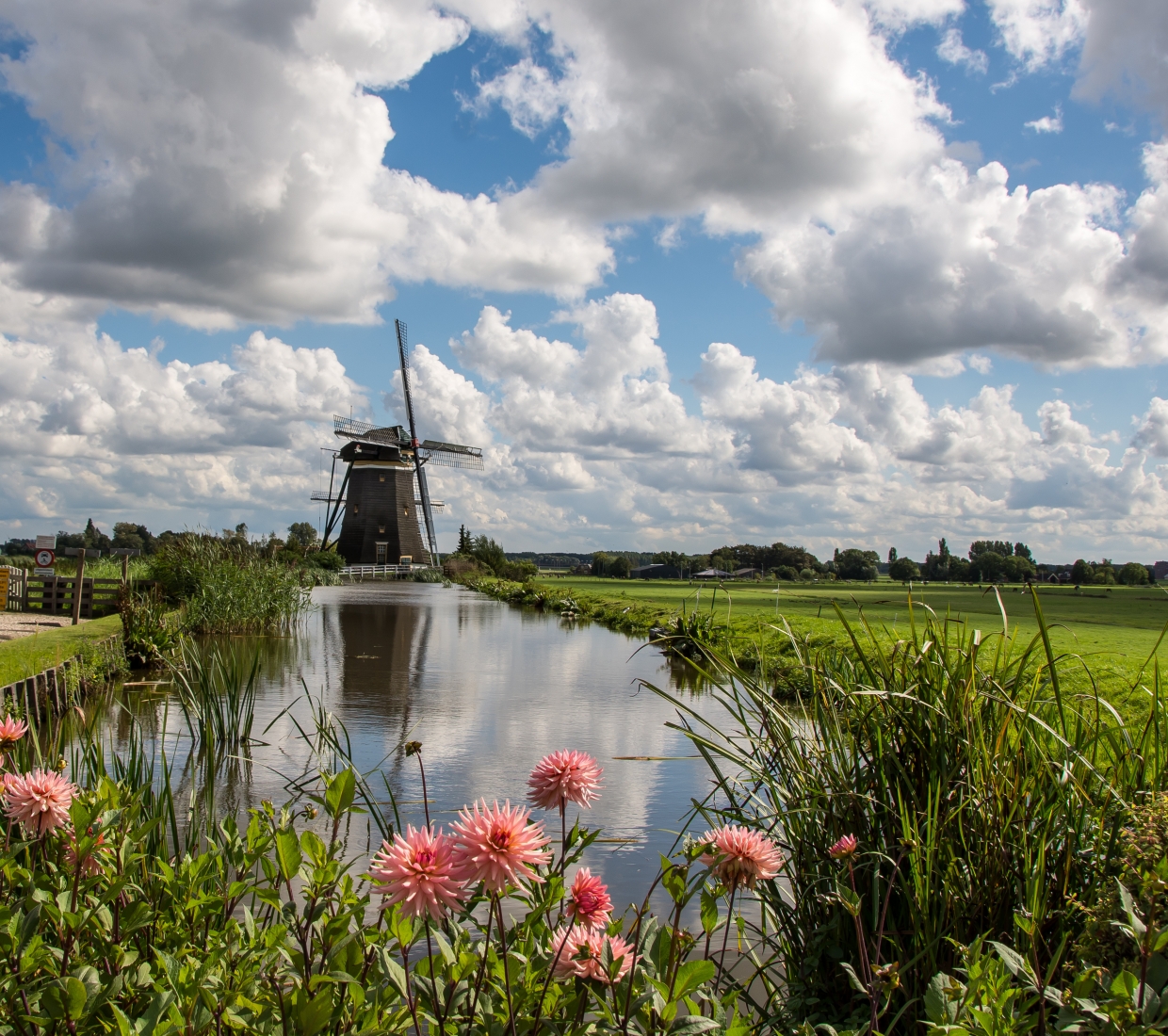
Kinderdijk is the essential water-management landscape: a UNESCO World Heritage Site where mills, canals, dikes, pumping stations and polders show how the Dutch learned to live with water. Visit early or late in the day for softer light and fewer crowds.

De Biesbosch National Park, near Dordrecht, is a freshwater delta of rivers, creeks and wetlands. It is one of the best places in the province for canoeing, boat trips, birdwatching and a completely different kind of Dutch silence.

Food, markets and local life

South Holland is a good province for travellers who like everyday food culture. Rotterdam has international restaurants, food halls and waterside places to eat. The Hague has everything from elegant dining to the multicultural Hague Market. Leiden and Delft are strong for cafés, bakeries and canal-side terraces.

Gouda is the classic stop for cheese, stroopwafels and old market traditions, but the surrounding countryside also rewards slow cycling between farms, lakes and villages. Along the coast, fish remains part of local identity, especially in places such as Katwijk and Scheveningen.

Flower fields, cycling and seasonal routes

In spring, the Bollenstreek around Lisse, Noordwijk and Hillegom is one of South Holland’s most memorable landscapes full of flowers. Keukenhof publishes a bloom calendar showing early

flowers from March into early April, fuller tulip displays from early April to early May, and late-season colour into May, though exact timing depends on the weather.

Cycling is one of the easiest ways to experience the province: through dunes, along rivers, around the Green Heart, between Leiden and the coast, or from Dordrecht towards Kinderdijk and De Biesbosch. Distances are manageable, landscapes are flat, and railway stations make one-way routes practical.

Travel tips for South Holland

Best time to visit: April and May are excellent for flower fields, cycling and city breaks, though the bulb season is popular and should be planned. June to September is best for beach days, terrace life and longer evenings. Autumn is good for museums, architecture and quieter city stays; winter suits Rotterdam, The Hague, Delft and Leiden if you prefer culture over coast.

How to get there: Schiphol Airport is just north of the province and has direct rail connections into major cities in South Holland. The Dutch rail network makes South Holland easy to reach without a car, and many main destinations are under an hour from Schiphol by train.

Getting around: Trains are best for travelling between Rotterdam, The Hague, Delft, Leiden, Gouda and Dordrecht. Local trams, metros, buses and ferries fill the gaps, and the Tourist Day Ticket can be useful for regional public transport, though it does not include trains.

Do you need a car? Not for city-based trips. A car can be useful for rural stays, the Green Heart, smaller villages, parts of the coast and nature reserves. Parking in city centres can be expensive and unnecessary. There, a mix of train, bicycle and occasional taxi is often the better choice.

How long to stay: Three nights is enough for one city base with day trips. Five to seven nights allows a richer journey with multiple stops, or a coastal or countryside stay for dunes, flowers or water landscapes.

FAQ

What is the best area to stay in South Holland?

For first-time visitors, Rotterdam, The Hague, Delft and Leiden are the strongest bases. Choose Rotterdam for architecture and food, The Hague for museums and the beach, Delft for romance and calm, and Leiden for culture, canals and easy access to the coast.

Is South Holland good for a beach holiday?

Yes, especially around Scheveningen, Kijkduin, Noordwijk and Katwijk. The coast is sandy and backed by dunes, with good options for walking, cycling, beach clubs and family-friendly seaside stays.

Is South Holland easy without a car?

Yes. Trains connect the main cities very well, and local trams, buses, metros, ferries and bicycles make most journeys straightforward. A car is only especially useful for rural accommodation or very flexible countryside routes.

What is the best time to see tulips in South Holland?

The general tulip window is from late March to early May, with the richest open-field colour often in April, depending on the weather. Check the current bloom reports before travelling.

Nuestras colecciones

¿Buscas el lugar perfecto donde alojarte? Deja que nuestras colecciones te inspiren.